Capture ideas before they vanish
Press Ctrl+Fn and start talking. Yaps records your voice, transcribes it automatically, and saves the note locally on your Mac. Create text notes, Kanban boards, and checklists. Export to Markdown or plain text. Quick Notepad shortcut (Shift+Fn) for instant capture. Searchable, organized, and always private.
One shortcut to record
Transcription delay
Searchable notes
Private storage
Typing vs Dictation
Same sentence. Watch the difference.
Typing
~40 WPM
Dictation
~150 WPM
The fastest way to remember
Voice notes are thinking out loud with a safety net.
One-Shortcut Capture
Press Ctrl+Fn from anywhere on your Mac. Yaps starts recording immediately. Speak your thought, release the keys, and the note is saved. The whole thing takes seconds.
Auto-Transcription
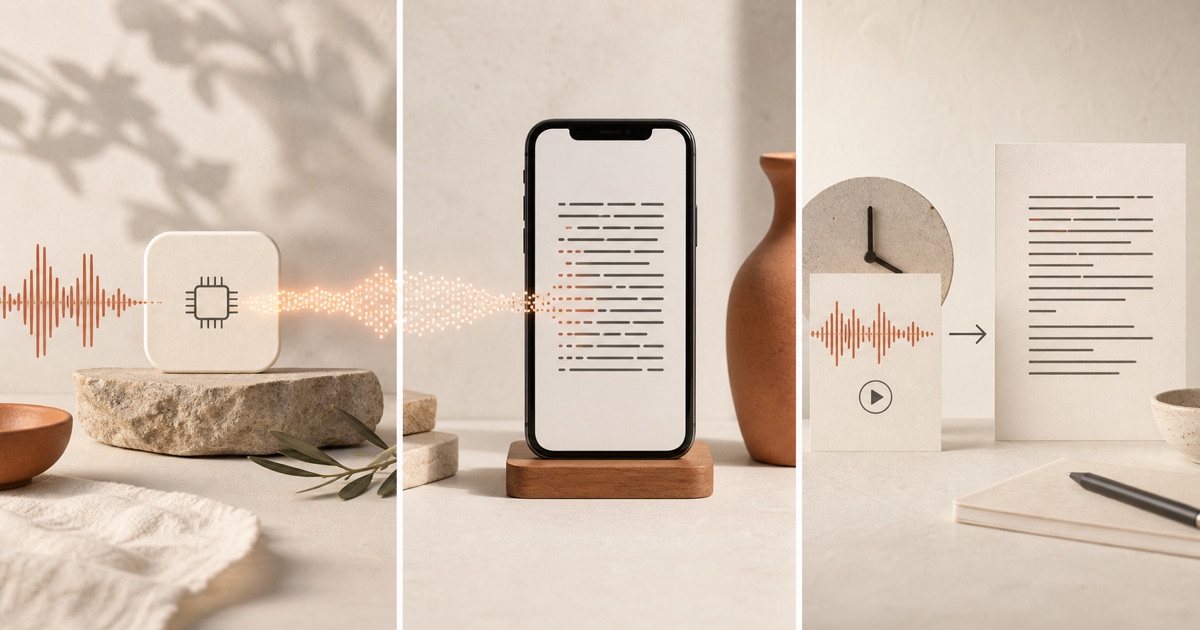
Every voice note is automatically transcribed using the same on-device speech model that powers Yaps dictation. You get both the audio and the text, stored together.
Full-Text Search
Search across all your voice notes by keyword. Find that idea you had three weeks ago by typing a word or phrase. No more scrolling through recordings hoping to find the right one.
Organized by Date
Voice notes are automatically organized by when you recorded them. Browse by day, week, or month to revisit your thinking over time.
Fully Offline
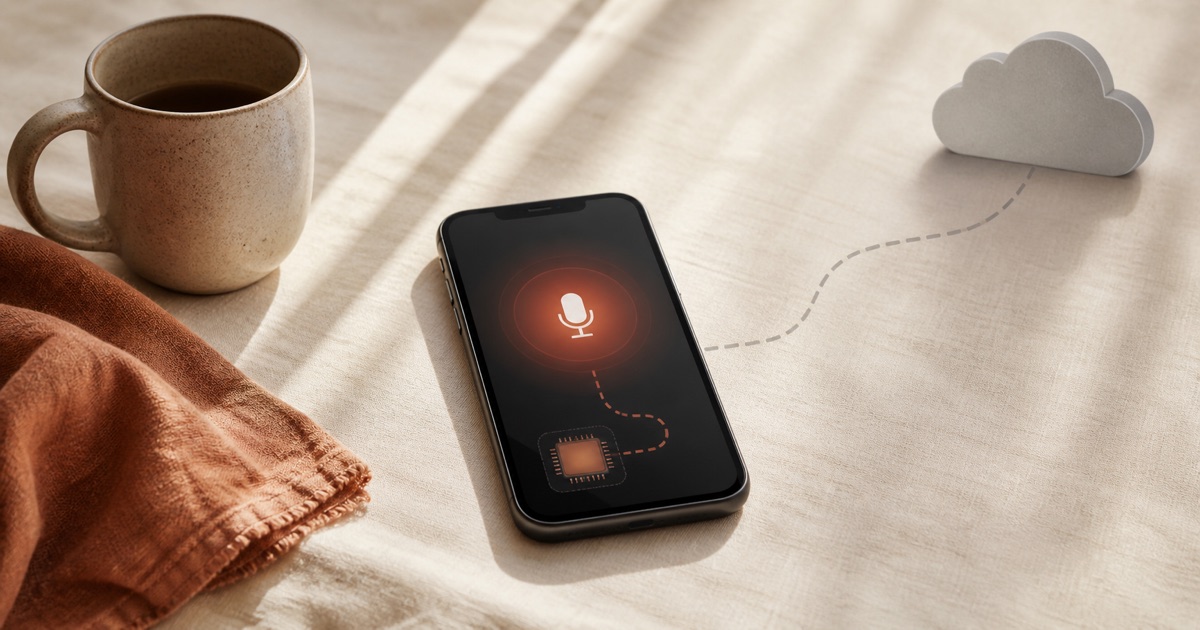
Recording, transcription, and storage all happen on your Mac. No internet required. Your voice notes are private by design, not by promise.
Quick Playback
Listen back to any note with variable-speed playback. Sometimes the tone and emphasis in your voice carry meaning that the transcript alone doesn't capture.
A second brain for everything you think
Voice notes work best when they fit naturally into your existing habits.
Idea Capture
The flash of insight between meetings, the solution that comes to you on a walk, the feature idea you think of in the shower. Capture it the moment it happens.
“What if the onboarding flow started with a voice command instead of a form? Need to prototype this.”
Thinking Out Loud
Some problems are easier to solve when you talk through them. Use voice notes as a private sounding board - no audience required.
Meeting Reflections
Right after a meeting, capture the key takeaways and action items while they're fresh. One minute of speaking saves ten minutes of typing.
“Call with the design team - they want the dashboard redesign by March. Need to scope the API changes first.”
Research and Study
Students and researchers can record observations, lecture reactions, and reading notes. Everything is searchable later when you're writing up your findings.
Daily Standups
Record a quick voice note at the start or end of your day. What did you do? What's next? It takes 30 seconds and creates a useful personal log.
Task Reminders
Speak your to-do items as you think of them. Review the transcriptions later and move them into your task manager when you have a moment.
“Remind me to review the pull request from James and update the documentation for the new API endpoint.”
Hear from people like you.
“I used to lose so many ideas because I couldn't be bothered to open an app and type them out. Now I just press Ctrl+Fn and talk. I've captured more useful thoughts in the last month than the previous six. And being able to search through them later? That's where it really pays off.”
Priya Sharma
Graduate Student
More on capturing ideas
Never lose a thought again
Press Ctrl+Fn. Speak. Done. Your idea is safe.
Requires macOS 13.0+ (Apple Silicon recommended)